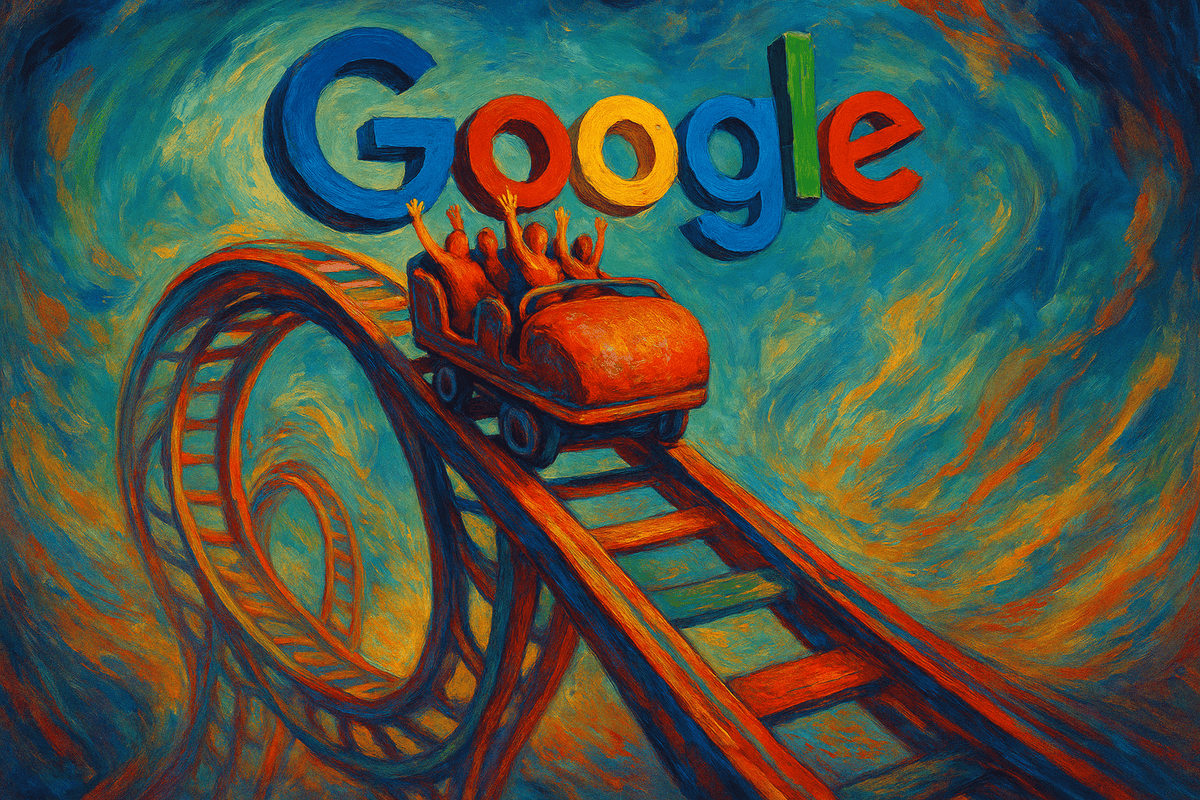
Google pushes the rollercoaster off the Edge again...
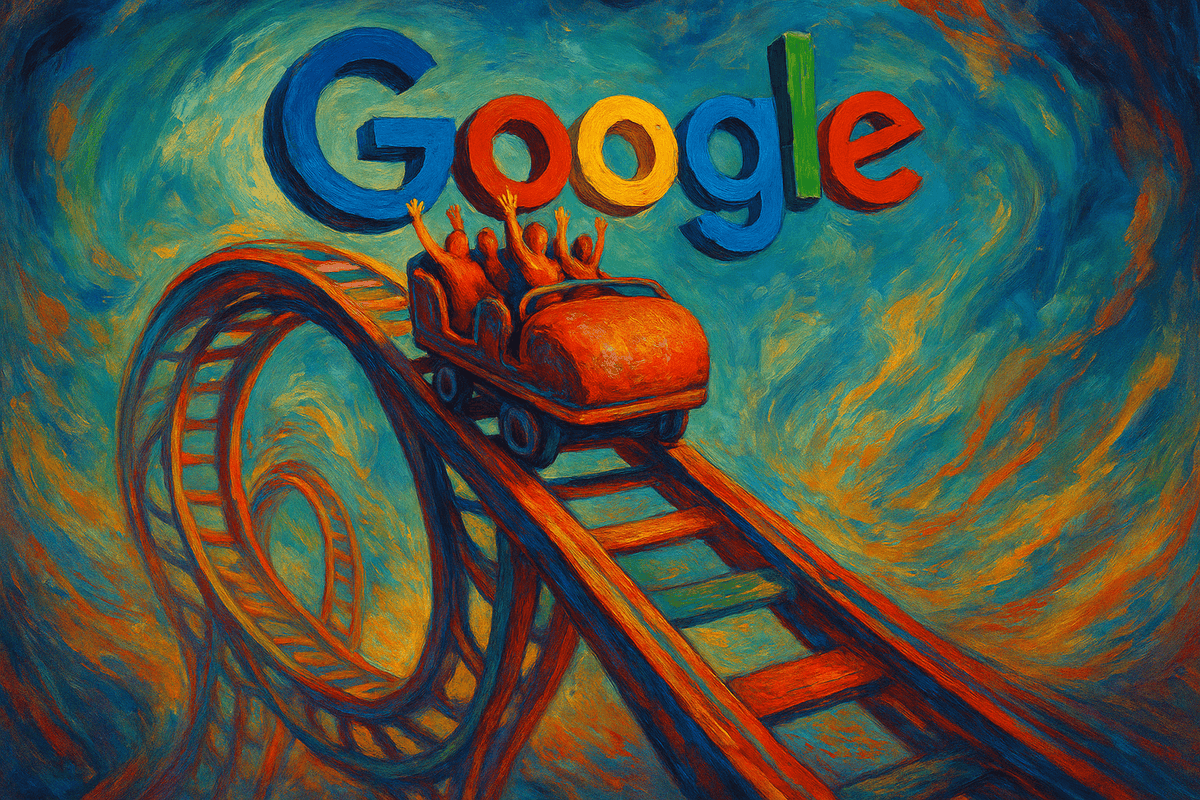
You just settled after the June core update and now the SERPs are dancing again. You’re watching rankings rise and fall like a roller coaster and it feels out of control.
We saw the core update finish on July 17, and still the chatter hasn’t died down. Our recap of the June update didn’t predict today’s spike, and SEOs everywhere are pulling their hair out.
Let’s break down what’s happening, review the data from top trackers, and share practical steps to ride the waves without losing your cool.
Key Takeaways
Volatility peaked again on July 31 and August 1, weeks after June’s core update.
Multiple third-party tools report spikes, suggesting a broad shake-up.
Webmaster chatter shows mixed recoveries and sudden drops in traffic.
News sites benefit in some cases, while shops see erratic conversions.
Practical monitoring and good content (sorry, i'll shamelessly plug our strategy builder) helps you spot trends early.
Actionable audits and internal link tweaks calm some of the turbulence.
Stay adaptive: testing content updates and backlink counts in real time is key.
Why Google algorithm volatility spikes matter
When Google’s search ranking volatility heats up, it’s like a sudden storm at sea, you need a sturdy ship. For months after the June 2025 core update finished on July 17, we expected calm waters. Instead, July 31 saw data surge again, and August 1 felt like the waves never subsided.
Major trackers like Semrush, Mozcast, Accuranker, and more have showed renewed spikes. These shifts can send your traffic down the drain or launch it skyward in a matter of hours. That’s why understanding these patterns isn’t optional; it’s a lifeline.
Tracking the latest spikes
Here’s a snapshot of what happened on July 31 and August 1, according to prominent tools:
Tool | Peak date | Volatility insight |
|---|---|---|
Semrush | July 31 | Above-average SERP shifts in finance and health niches |
Mozcast | August 1 | Storm-level heat for local search queries |
Accuranker | July 31 | Major ranking swings for ecommerce sites |
Mangools | August 1 | Unexpected volatility in recipe and news pages |
Which segments feel it most?
Imagine a busy market day where some stalls thrive and others clear out their shelves. That’s what this roller coaster feels like. News sites often see bursts of curiosity-driven clicks, while shops and service pages may suffer lulls. Summer slump and AI answer boxes have their own roles to play too.
In some cases, sites hit by the June core update got hit harder this time. WebmasterWorld and various forums lit up with reports of huge SERP shifts, blinking traffic numbers, and disappearing backlinks.
Real-world chatter from the SEO community
Friendly chatter has been all over the place for the past week. Here are a few snippets to help you feel less alone:
"Seeing huge SERP position shifts today, anyone else? Sites hit by June core update are being hit harder!"
"My UK traffic went from sky-high inquiries to zero overnight. It’s like someone flicked a switch."
"Backlinks I counted yesterday aren’t in Google’s report anymore, even though they’re live."
"After a rough patch, things are calm again for me, I did more internal linking which seems to have helped."
"Our news traffic is holding up, but the shop is a roller coaster: peaks one day, tumble the next."
Why these swings feel personal
It’s like riding a seesaw that your neighbour controls. One minute you’re up, the next you’re down, and you don’t know why. When rankings surge, you celebrate. When they drop, you panic. Recognising this emotional tug-of-war helps you stay rational.
Practical steps to ride the waves

Just as a sailor checks his compass, you need clear signals to guide your SEO ship. Here’s what you can do today:
Monitor volatility daily with aggregated charts for a big-picture view.
Audit pages that saw the biggest swings; look for thin content and outdated keywords.
Update internal links to spread authority and improve crawl patterns.
Test fresh content formats or meta tweaks where volatility is highest.
Track backlink counts manually to catch sudden removals.
Using tools to stay ahead
Third-party trackers give clues, but they don’t explain "why." You can pair these with your own site audits to connect the dots.
Pro tip: Try looking for 11-20 keyword rankings for content/pages which have dropped out of the top rankings. Update this content with new headings, up to date info, meta tags and see if you gain quick traffic wins by regaining lost rankings.
And if you want more informative help, the latest Google Search Console AI metrics can nudge you in the right direction when it comes to AI and search.
When to wait and when to act
Sometimes the sea calms on its own, and any rash move crowds your deck. Other times, waiting means missing the tide. Here’s how to know:
If volatility sustains for more than a week, deep-dive your worst-hit pages.
Short, sharp spikes? Monitor until they align with a confirmed Google update.
Combine ranking data with real user metrics, don’t chase pure position shifts.
Picture volatility like a neighbourhood dog barking at every passerby. Sometimes it’s real, someone’s at the door, and sometimes it’s the wind. Learning to tell the difference saves you midnight dashes to answer an empty doorbell.
Keeping perspective
Not every tremor means disaster. Small sites can see huge swings with low traffic volumes, while big brands barely budge. That doesn’t mean the update ignored them, it just feels smoother when you’re moving more mass.
Focus on user experience, relevance, and technical health. If you keep these fundamentals strong, you’ll weather most storms in good shape.
Using a calm anchor
At the end of the day, Google wants relevant, useful content. Think of volatility as the search engine fine-tuning its lens. Every tweak aims to deliver better answers to its users, even if it feels painful in the moment.
If you have questions or need a hand navigating these choppy waters, feel free to reach out to me. I'm here to help steady your ship and chart the best course ahead.