Recipe Search Keywords Showing in Google AI Overviews
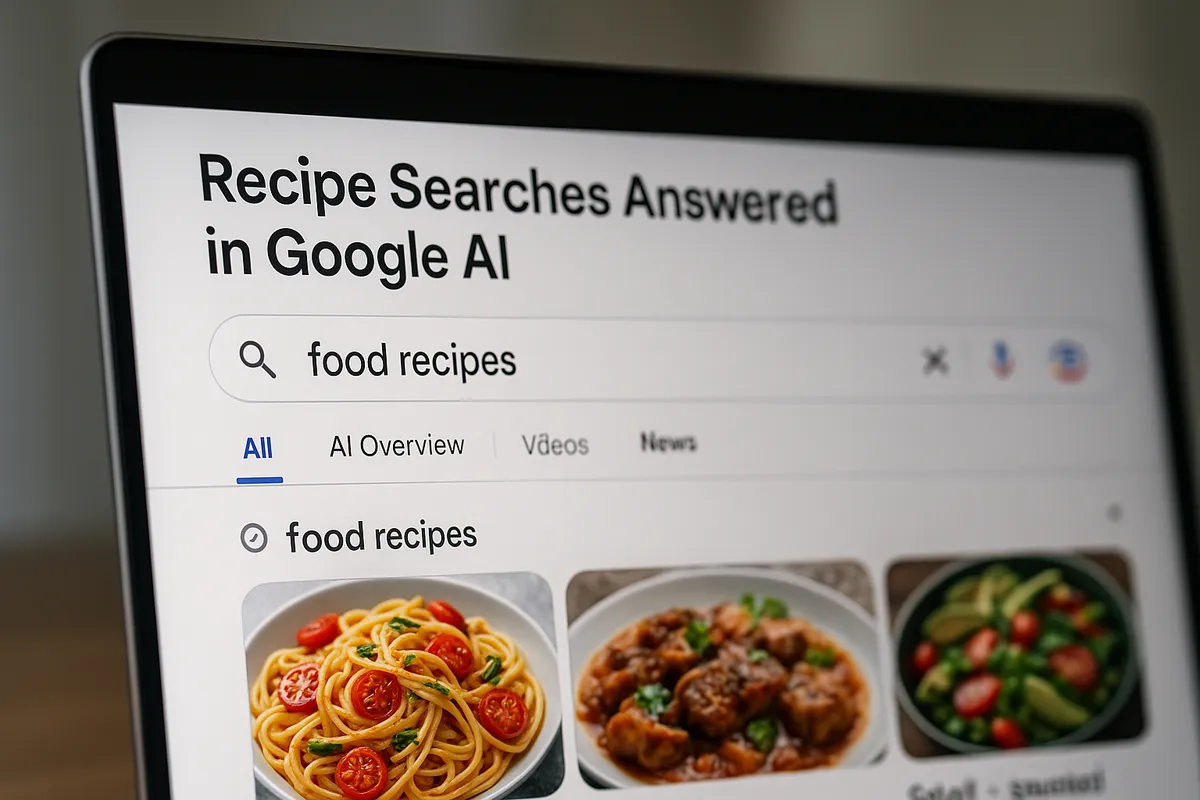
Ever noticed fewer visitors to your recipe blog lately? Recipe bloggers are seeing mysterious traffic dips as search evolves, leaving many scrambling. Google's new AI Overviews are answering recipe searches directly – but only when you don't ask for recipes! This stealthy change upends traditional SEO tactics overnight. Discover how to adapt before your readership simmers away in our evolving landscape of SEO in 2025.
Key Takeaways
Recipe intent triggers AI Overviews, while explicit "recipe" keywords show traditional rich results
This feature currently surfaces only on desktop searches, disappearing on mobile devices
Chatbots like ChatGPT create additional competition with plausible (but unreliable) recipe generation
Food bloggers face traffic dips from direct answers in search and AI competitors
Future-proofing requires tactical keyword shifts and signature recipe authenticity
Google shows linked sources in Overviews – aim to become the recommended authority
What exactly are we seeing with recipe searches?
Picture this: You search "how to make ratatouille" hoping for traditional recipe cards. Instead, Google's AI Overview pops up with endless cooking steps right on the results page. Now try "ratatouille recipe" – boom! Classic recipe snippets appear. This difference signals Google's semantic shift.
The secret lies in keyword intent. Algorithms now interpret context beyond exact phrases. Queries like "decadent chocolate dessert" scream recipe desire louder than "muffin shops nearby." These implied searches trigger Overviews, while literal "recipe" terms maintain familiar formats. It's Google's way of predicting what you really want.
Tom Critchlow spotted this pattern early. His LinkedIn analysis revealed AI Overviews surfacing for food queries lacking explicit recipe language. He noted something fascinating: Overviews include links to chosen sources with context – potentially offering publishers new opportunities alongside risks.
Why some words trigger AI Overviews and others don't
Google's playing culinary detective. When your search includes "recipe," algorithms think: "User wants specific instructions from multiple sites." But queries like "easy weeknight salmon" whisper: "Help me cook dinner tonight!"
The recipe keyword paradox
There's irony here. Typing "recipe" gives you curated plates from food bloggers. Omitting it unlocks AI's direct cooking instructions. This catch-22 impacts visibility unpredictably.
Analyse these keyword twins:
Beef Bourguignon Recipe: Multiple recipe card links with star ratings
Coq au Vin: AI-generated cooking steps with source links sprinkled in
Notice the invisible threshold? Terms implying no prior knowledge or need for visual guidance (topics like "quick dinners") ignite Overviews. As AI SEO Writer capabilities advance, precise language becomes critical.
The Desktop vs. mobile curveball
Here's where things get weirder: these patterns only appear on desktop searches. Mobile queries show completely different behaviour – no recipe Overviews whatsoever. Try searching "healthy dinner ideas" across devices.
Desktop displays step-by-step instructions complete with ingredient lists. The same mobile search returns Pinterest-style idea carousels. This fragmented rollout adds complications for bloggers tracking traffic losses.
What this means for recipe publishers
Food bloggers first spotted traffic tremors months ago. Now we see why: someone searching "cordon bleu techniques" sees cooking methods immediately. Why click through unless truly invested? Or they share this frustration privately in forums.
How different recipe searches currently behave
Search Query Type | Desktop Results | Mobile Results |
|---|---|---|
"[Dish] recipe" (e.g., ramen recipe) | Traditional rich recipe cards | Traditional rich recipe cards |
Dish name only (e.g., ramen) | AI Overview with cooking steps | General search results |
Cooking concepts (e.g., easy dinners) | AI Overview with multiple recipes | Image/video inspiration galleries |
Chatbots joining the heat
Meanwhile, AI Marketing Tools like ChatGPT bombard users with instant recipes. Ask for "gluten-free banana bread" and it fabricates plausible-sounding recipes in seconds. Though potentially flawed (trusting synthetic proportions is risky!), convenience wins for casual cooks.
Chatbots never cite sources correctly. That mushroom risotto recipe could be three celebrity chefs' work mashed up. Yet they satisfy immediate needs, accelerating traffic diversion from expert blogs. We see this unfolding alongside Google's AI-powered social shifts.
Future-proofing your recipe strategy
Don't abandon your cookbook dreams! Shift from chasing keywords to crafting signature experiences. Emphasise what AI can't replicate: cultural food stories and hard-won kitchen wisdom.
Try these adjustments:
Create "tribe specific" recipes (vegan air-fryer enthusiasts?)
Target long-tail queries like "authentic Neapolitan pizza dough techniques"
Optimise for "why" questions about culinary science
Film processes showing visual texture cues AI descriptions miss
Promote interactive tools like meal planners beyond static recipes
Consider repackaging a basic recipe as total culinary immersion using an SEO strategy builder. Teach the craft behind the dish rather than just measurements. Guide readers through food chemistry with your grandma's secret adjustments.
Monitor keyword landscapes with keyword finders, tracking non-recipe food queries inviting Overviews. Identify where traditional results still dominate. Position older content as complementary to AI answers – "See the authentic version we referenced!"
Finding balance in the kitchen of tomorrow
The best recipes endure because they nourish beyond ingredients. Your readers aren't just seeking instructions – they crave the joy in grandma's handwritten notes or regional ingredient nuances AI strips away. Cook the irreplaceable flavours algorithms cannot replicate.
Ready to transform how audiences discover your culinary expertise? Our outranking tool helps resonate amid search revolutions. Let's adapt together – because the world always needs real kitchen wisdom!